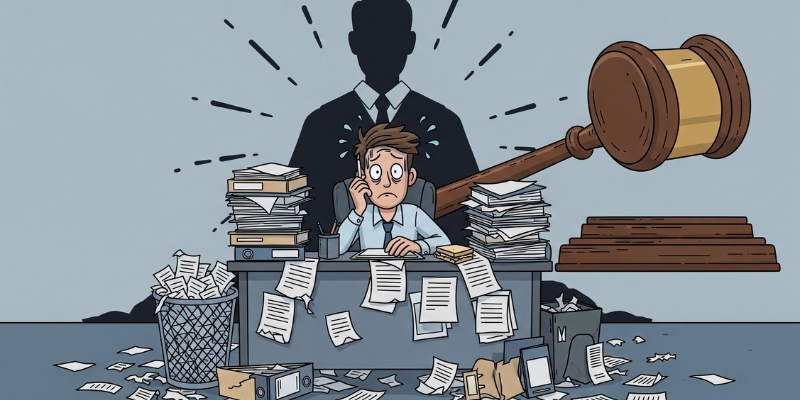

Workplace disputes often become harder to defend when records are missing, unclear, outdated, or scattered across different systems. Many employers only realise the value of proper documentation after a complaint, grievance, dismissal challenge, wage dispute, or tribunal claim has already started. A workplace decision may have been fair at the time, but without written proof, it can appear inconsistent or poorly managed later. Documentation is not just paperwork; it is the evidence trail that explains what happened, why action was taken, and whether the employer followed a reasonable process before making important decisions.
Records That Protect Employers
Unclear Contracts and Missing Policy Acknowledgements
One of the most common documentation gaps that increases employer risk is the absence of clear employment contracts and signed policy acknowledgements. When employees do not have written terms covering pay, duties, working hours, probation, notice, confidentiality, holiday entitlement, sickness reporting, disciplinary rules, and grievance procedures, disagreements can quickly turn into wider legal problems. A manager may believe an employee understood a rule, but if there is no signed document or recorded confirmation, the employer may struggle to prove that the rule was properly communicated. Policies can also become risky when they are stored somewhere employees rarely access or when updated versions are issued without confirmation that staff have read them. This becomes more serious in disputes involving misconduct, absence, remote work, data use, or workplace behaviour. Employers seeking Employment Law Advice often discover that the issue is not only what decision was made, but whether there is written proof that the employee knew the standards expected before action was taken.
Weak Performance Records and Informal Warnings
Performance management becomes risky when concerns are handled only through casual conversations, verbal reminders, or brief messages that do not explain the problem clearly. Many employers delay written records because they want to maintain a friendly working relationship or avoid making the issue feel formal too early. That approach can create difficulty later if the employee is dismissed, demoted, denied promotion, placed on a performance plan, or challenged about poor output. Without dated notes, examples of missed targets, meeting summaries, training records, and follow-up actions, the employer may appear to have acted suddenly or unfairly. A strong performance file should show what the concern was, when it was raised, what support was offered, what improvement was expected, and how much time the employee had to respond. Gaps in this area also create room for claims that performance concerns were invented after a protected complaint, sickness absence, pregnancy announcement, disability disclosure, or workplace disagreement.
Incomplete Disciplinary and Investigation Notes
Disciplinary matters are heavily dependent on documentation because employers need to show that decisions were based on evidence rather than assumption. A common gap occurs when managers investigate an incident but fail to keep proper notes of interviews, evidence reviewed, witness accounts, decision reasoning, or alternative explanations considered. If the matter later reaches a tribunal, the employer may need to explain why one witness was believed over another, why a sanction was chosen, and whether the employee was given a real chance to respond. Missing notes can make the process look biased, rushed, or pre-decided, even where there were genuine concerns at the time. Employers should also be careful when using informal messages during investigations, because short comments can be misread without context. A complete disciplinary record should show the allegation, evidence, meeting invites, employee responses, adjournments, outcome reasoning, appeal rights, and any previous warnings relied upon.
Poor Absence, Health, and Adjustment Records
Absence and health-related issues carry added risk when documentation is inconsistent or overly brief. Employers may record absence dates but fail to document the reason given, medical certificates received, return-to-work discussions, occupational health referrals, adjustments requested, or temporary arrangements offered. This can be especially damaging where the employee later argues that the employer ignored disability-related needs, treated sickness unfairly, or failed to consider reasonable adjustments. A record saying only “employee absent again” does not show whether the employer handled the matter fairly or sensitively. Good documentation should reflect communication with the employee, the impact on the business, medical information considered, options discussed, and why any decision was reached. Employers should also avoid judgmental language in absence notes, as phrases suggesting frustration or disbelief may later be used against the business. Clear, factual records help show that the employer balanced operational needs with the employee’s circumstances.
Missing Grievance and Complaint Trails
Workplace complaints can create serious risk when they are raised verbally, through informal messages, or during meetings but are not recorded properly. An employee may later claim that they reported bullying, harassment, discrimination, unsafe conditions, unpaid wages, or unfair treatment, while the employer may say the concern was never formally raised. If no written trail exists, the dispute can become a credibility contest. Employers should keep clear notes of complaints even where the employee says they do not want to “make it official,” because the business may still have a duty to respond depending on the issue. Records should show what was reported, who received the complaint, what steps were taken, whether witnesses were contacted, what outcome was reached, and how the employee was informed. Missing grievance records can also create retaliation risk if the employee is later disciplined, dismissed, moved teams, or treated differently after raising concerns.
Pay, Hours, and Leave Record Errors
Documentation gaps around pay, hours, overtime, holiday, commission, bonuses, deductions, and leave can quickly lead to costly disputes. Employers sometimes rely on payroll summaries without keeping the supporting records that explain how payments were calculated. This becomes risky where employees work variable hours, receive commission, have changing schedules, or take unpaid leave. If a worker later challenges wages, holiday pay, or deductions, the employer needs records that connect the payment decision to the agreed terms and actual work performed. Poor time records can also cause problems in sectors where staff work irregular shifts or respond to messages outside normal hours. Leave records should show requests, approvals, refusals, carry-over arrangements, sickness during holiday, and any pay adjustments. A small payroll mistake can become a wider claim if the employer cannot explain it properly. Accurate records reduce confusion and help prevent ordinary accounting issues from becoming formal employment disputes.
Conclusion
Workplace documentation gaps often remain hidden until a dispute forces every decision, message, and meeting to be reviewed. Employers can reduce risk by keeping records that are accurate, dated, factual, and easy to retrieve. Contracts, policies, performance notes, disciplinary files, absence records, grievance trails, and pay documents all help explain the employer’s actions if they are later questioned. Poor documentation does not automatically mean the employer acted unlawfully, but it can make a fair decision much harder to prove. A consistent record-keeping culture gives businesses stronger control over workplace issues and reduces uncertainty when conflict arises.
