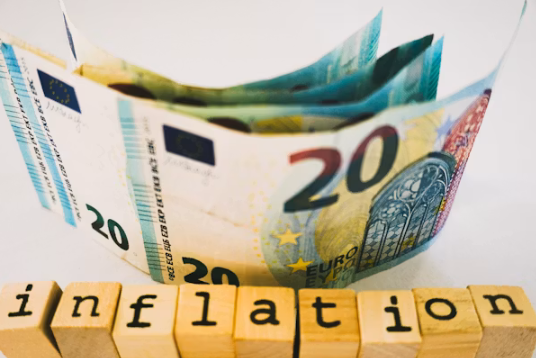

Persistent inflation is changing the traditional rhythm of the economic cycle. Growth can remain positive while borrowing costs stay elevated, consumer confidence weakens and different sectors move in opposing directions, making a broader set of indicators essential for investors.
Why does persistent inflation change the usual economic cycle?
Economic cycles are commonly described as a sequence of expansion, slowdown, contraction and recovery. In practice, those phases are rarely clean. Employment may remain resilient while housing weakens, or consumer spending may rise even as confidence falls.
The framework of cycle economics helps connect changes in growth, inflation, interest rates, credit and corporate earnings. Its purpose is not to predict an exact turning date. Instead, it provides a way to assess whether momentum is strengthening, losing speed or beginning to recover.
Persistent inflation makes that assessment more difficult. Central banks may be unable to reduce interest rates quickly when prices continue rising above target, even if parts of the economy are slowing. The result can be an extended period in which economic growth remains positive but households and businesses face restrictive financing conditions.
Why is headline inflation only part of the picture?
Headline inflation includes volatile components such as food and energy. Core inflation removes some of those categories to provide a clearer view of underlying price pressure. Neither measure should be considered in isolation.
A concrete example shows how quickly the environment can change. After annual US inflation had fallen to 2.3% in April 2025, consumer prices were 4.2% higher in the year to May 2026. Energy contributed to the renewed increase, but housing and service costs remained important sources of pressure.
For households, the distinction between headline and core inflation may feel less meaningful. Higher fuel, rent, insurance and grocery bills all reduce disposable income, regardless of how economists classify them. Investors, however, need to identify whether inflation is being driven by a temporary supply shock or by broader demand and wage pressures.
Which indicators reveal whether growth is still healthy?
Gross domestic product provides a broad measure of activity, but it arrives with a delay and is subject to revision. A more timely assessment considers several areas together:
- Employment: Hiring, hours worked and unemployment claims reveal whether companies remain confident.
- Consumer spending: Retail activity shows whether households are still supporting growth.
- Housing: Mortgage applications, construction and sales react quickly to financing costs.
- Credit: Lending standards and default rates indicate whether financial pressure is building.
- Corporate earnings: Revenue, margins and forecasts show how inflation affects businesses.
These indicators may send conflicting messages. For example, retail sales increased by 0.9% in May 2026, suggesting that household demand remained resilient despite inflation concerns. Higher-income consumers appeared to provide an important part of that support.
Strong spending does not necessarily mean that every household is financially secure. Consumption can remain elevated while savings decline or credit balances increase. The composition and durability of demand therefore matter as much as the headline figure.
Why do interest rates transmit inflation pressure unevenly?
Higher rates do not affect every sector at the same speed. Housing usually responds early because mortgage payments depend directly on financing costs. Small companies may also feel the effect quickly if they rely on variable-rate loans or regular refinancing.
Large companies with strong cash positions may be less exposed. Technology investment can continue even while residential construction slows. This creates an economy in which some sectors resemble an expansion and others already display late-cycle weakness.
Borrowing costs can also rise before a central bank changes its policy rate. Bond investors respond to expected inflation, government borrowing and economic risk. During one period in early 2026, the ten-year US Treasury yield climbed from 3.97% to 4.45% in a month, increasing pressure on mortgages and business finance.
How can persistent inflation affect different investments?
Inflation influences assets through several channels. Higher input costs can reduce corporate margins, while elevated interest rates lower the present value of future earnings. Bonds may offer higher yields, but existing fixed-rate securities can lose value when market rates rise.
Commodity prices may benefit from certain supply shocks, although they remain volatile. Companies with strong pricing power may pass costs to customers more easily than businesses operating in highly competitive markets. Banks can benefit from wider lending margins, but only if credit quality remains stable.
No asset class responds predictably in every inflationary period. Valuation, market expectations and the source of inflation all matter. An energy-driven shock produces different effects from inflation caused by rapid wage growth or housing shortages.
How should investors interpret the new economic pulse?
Persistent inflation makes single-signal strategies particularly unreliable. One strong jobs report does not prove that the expansion is secure, just as one weak housing figure does not confirm a recession.
A disciplined approach compares whether employment, spending, credit, housing and earnings are moving in the same direction. It also considers what markets have already priced in. Assets may rise before inflation falls if investors expect future policy easing, or decline despite positive economic data when valuations already assume strong growth.
The economic cycle remains useful, but it should be treated as a probability framework rather than a fixed timetable. Persistent inflation can delay transitions, create uneven sector performance and limit the policy response to weaker growth. Investors who examine several indicators together are better positioned to distinguish a temporary shock from a broader change in economic momentum.
