

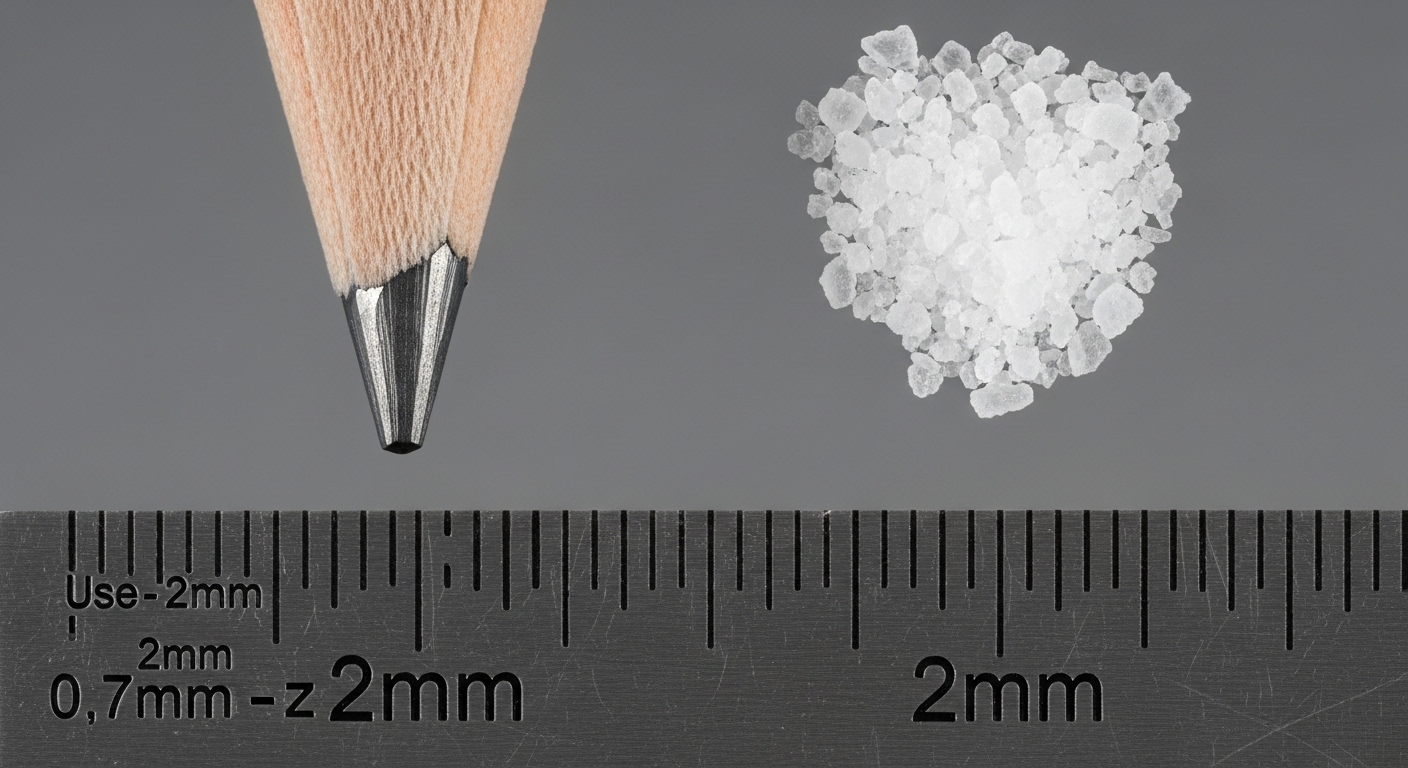
Have you ever stared at a ruler and wondered… wait, how small is 2mm actually? Not the kind of thought that arrives loudly, mind you. It creeps in quietly while fixing glasses, assembling furniture, or trying to pull a splinter out of a finger at 2 a.m.
with a flashlight and mild panic. Measurements, especially tiny measurements, tend to feel abstract until life throws them right in front of our eyes.
I remember the first time someone asked me, “So what does 2 millimeters even look like?” I blinked at the ruler like it had just insulted me personally.
The truth is, our brains understand size comparison better when we relate numbers to everyday objects. Numbers alone? Meh. But a mustard seed, a grain of rice, or the thickness of smartphone screen glass? Suddenly it clicks.
The metric system with units like millimeter (mm), centimeter (cm), and meter (m) was designed for clarity. Still, the human mind likes stories more than scales.
So instead of dry numbers, this guide explores real-world measurement examples. We’ll peek at small objects, tiny technological components, and things you probably see every day but never measure.
So if you’ve ever googled “how big is 2mm in real life” or “what does 2mm look like compared to objects,” you’re in exactly the right place. And honestly? It’s kinda fascinating how many ordinary things live right around that 2mm thickness.
Let’s shrink down for a moment and explore a world where fractions of a centimeter suddenly feel enormous.
| Object / Item | Approximate Size | How It Relates to 2mm |
|---|---|---|
| Mustard Seed | 1–2 millimeters (mm) | Very close to 2mm in diameter |
| Rice Grain (Width) | About 2 mm wide | A good everyday 2mm size comparison |
| Pencil Lead (2mm type) | 2 mm diameter | Drafting pencils often use 2mm lead |
| Ceramic Tile Spacer | 2 mm thickness | Common in tiling for even spacing |
| Small Ant | Around 2–3 mm long | Some tiny ants measure about 2mm |
| Smartphone Screen Glass | Around 1–2 mm thick | Protective tempered glass layer |
| Matchstick Thickness | About 2 mm | Typical wooden matchstick width |
| Precision Screws (Electronics) | Around 2 mm diameter | Used in phones and small devices |
| Nickel Coin Thickness | ~1.95 mm | Very close to 2 millimeters |
Understanding the Measurement: What Exactly Is 2mm?
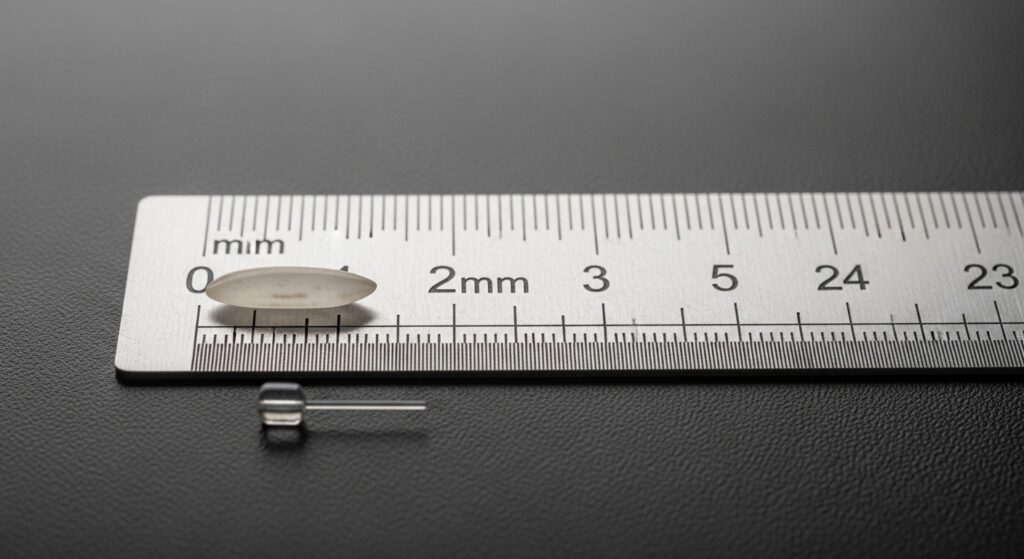
Before we dive into object size examples, it helps to ground ourselves in the numbers though don’t worry, we’ll keep it painless.
A millimeter (mm) is one-thousandth of a meter (m). That sounds impressive and science-y, but it’s easier to picture when you stack it against other metric units.
- 2mm to cm: 0.2 centimeter (cm)
- 2mm to inches: roughly 0.078 inch
- 2mm to micrometers: 2,000 micrometer (µm)
- 2mm compared to a meter: 0.002 meter (m)
If we move into larger scales, things get kinda funny.
- 1 meter (m) = 1,000 millimeters (mm)
- 1 kilometer (km) = 1,000 meters (m)
- 1 yard (yd) ≈ 0.914 meter (m)
- 1 feet (ft) ≈ 304.8 millimeters
Which means 2 millimeters is unbelievably tiny compared to a foot or yard. Like… blink and you miss it kinda small.
This is why measurement comparison with physical items is helpful. Engineers in precision engineering, designers working with micro objects, and even biologists studying ecosystems rely on small scale measurement constantly.
The rest of us? We just need a good mental reference.
So let’s build one.
Everyday Objects That Help You Visualize 2mm
Here’s where things get interesting. These small everyday objects offer a surprisingly good scale comparison guide for understanding 2mm size comparison in daily life.
Some are natural, some are technological, and a few come from the fascinating world of precision screws and ceramic components.
A Mustard Seed
One of the most classic tiny objects size reference examples is the humble mustard seed.
Seeds from Brassica nigra, a mustard plant species, typically measure about 1–2 millimeters in diameter. That tiny round speck sitting in your spice jar? Yep, that’s basically 2mm.
These seeds may look insignificant, but they’ve influenced cuisines, agriculture, and even metaphors for growth across cultures. Funny how micro-scale objects sometimes hold big meanings.
The Thickness of a Smartphone Screen
Modern phones are marvels of technology entities, particularly the layered structure of smartphone display glass.
Most displays use tempered glass chemically strengthened to resist cracks and scratches. The outer protective layer can be around 2mm thick, depending on the model.
So next time you swipe across your screen, remember: that smooth surface protecting your digital life is roughly the same thickness as our measurement star today.
A Ceramic Tile Spacer
If you’ve ever watched someone install tiles, you might’ve noticed those little cross-shaped plastic pieces placed between them.
A ceramic tile spacer often measures about 2mm. Its job? Maintain even gaps so grout lines look clean and symmetrical.
It’s a small tool, but in construction and interior design, precise spacing is everything. A couple extra millimeters can ruin the alignment of an entire wall.
The Diameter of Pencil Lead
Standard mechanical pencils often use leads measuring around 0.5mm, 0.7mm, or 2mm.
That thicker pencil lead thickness the sturdy one used in drafting pencils sits right around our measurement mark.
Artists and engineers sometimes prefer 2mm lead because it’s durable and easier to sharpen to different shapes. It also produces a darker line, which is oddly satisfying.
A Small Ant
Certain ants species measure roughly 2 millimeters in length.
Now, not every ant is that small some are several centimeters long but many worker ants fall into this tiny range.
Watching one crawl across a surface is a pretty good way to grasp how small is 2 millimeters in motion.
And honestly? It’s a little humbling. Entire ecosystems run on creatures that barely reach the width of a grain of rice.
Read this blog: https://marketbellions.com/water-bottle-dimensions/
The Width of a Rice Grain
A typical rice grain width is about 2mm, though length varies depending on the variety.
Whether it’s jasmine, basmati, or short-grain sushi rice, that slim white grain sitting in your bowl is a pretty accurate real-world measurement example.
Funny thing is, chefs handle thousands of these tiny units every day without ever thinking about the metric measurement guide behind them.
Precision Screws in Electronics
Inside laptops, cameras, and watches you’ll find incredibly small precision screws.
Some measure only 2mm in diameter, sometimes even smaller. These screws hold together delicate components like ceramic capacitors and tiny circuit boards.
Without these microscopic fasteners, modern electronics simply wouldn’t exist. That’s the magic of precision measurement in engineering.
Matchstick Thickness
A standard wooden matchstick head and stick together measure somewhere around 2mm thick, depending on manufacturing.
That’s another everyday reference for understanding 2mm thickness examples.
It’s also a reminder that humans have long been good at making small things that do surprisingly big jobs.
Nickel Coin Edge Comparison
A nickel coin made of nickel metal and copper alloys has a thickness just slightly over 2mm.
While not exact, it offers a relatable scale and proportion reference. Stack a coin on its edge and you’re basically looking at something very close to the measurement we’re exploring.
Coins are great teaching tools when explaining millimeter measurement to students.
Why 2mm Matters in Science and Technology

At first glance, 2 millimeters feels insignificant. But in many fields, that difference can decide whether something works… or fails spectacularly.
In precision engineering, tolerances are measured in fractions of a millimeter (mm). A component that’s even slightly thicker than expected could cause mechanical parts to jam.
In biology, micro objects like insect anatomy often fall within the micrometer (µm) to millimeter scale. Studying them requires microscopes and meticulous measurement comparison.
Electronics manufacturing also depends heavily on tiny parts.
Components like ceramic capacitors those small rectangular bits on circuit boards are frequently just a few millimeters wide. Their internal ceramic components store and release electrical energy, enabling smartphones, computers, and even satellites to function.
Which is kinda wild when you think about it. Something measuring 2mm might literally help power the device you’re reading this on.
Why Our Brains Struggle With Tiny Measurements
Humans are surprisingly bad at visualizing small units.
We can estimate distances like a yard (yd) or a foot (ft) easily because we experience them daily. But when numbers drop below a centimeter, our intuition gets fuzzy.
Psychologists studying measurement in daily life say this happens because our brains prefer scale comparison rather than abstract numbers.
In other words:
We don’t picture 2mm.
We picture a mustard seed.
Or a rice grain.
Or the thickness of glass.
That’s why everyday measurement references are such powerful learning tools. They anchor numbers to physical experience.
Once your brain connects the two, the concept sticks.
Comparing 2mm With Other Common Measurements
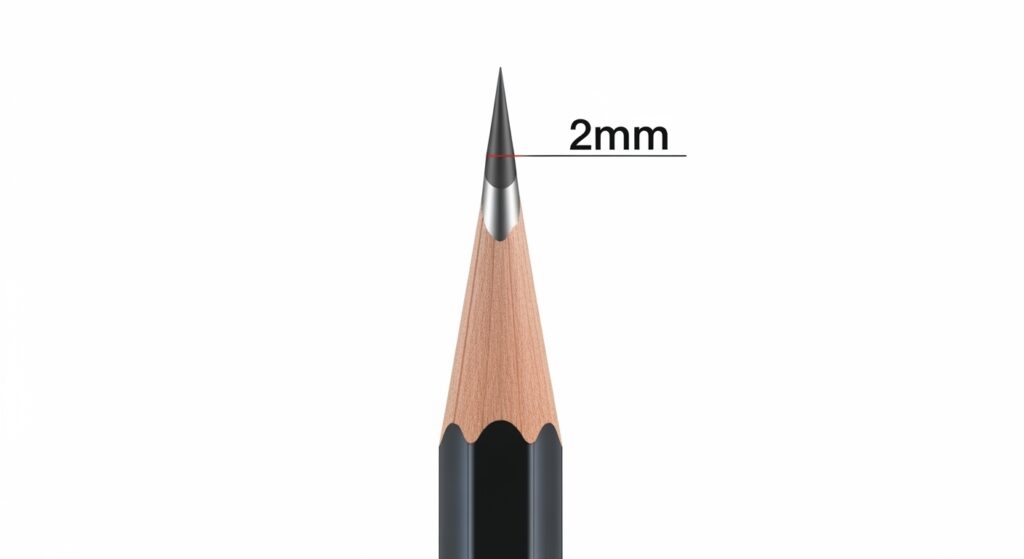
To make things even clearer, here’s a quick metric size comparison ladder.
- 1mm roughly the thickness of a credit card edge
- 2mm a mustard seed or rice grain width
- 5mm about the thickness of a pencil eraser
- 10mm (1cm) the width of a fingernail
Articles like “how big is 1mm,” “how big is 3mm,” or “how big is 5mm” often use these references because they’re easy to visualize.
Measurement becomes intuitive when objects enter the conversation.
Practical Ways to Estimate 2mm Without a Ruler
Let’s say you don’t have a ruler handy which, honestly, happens more often than you’d think.
Here are a few rough tricks:
- Look at a rice grain width
- Compare with a mustard seed
- Imagine the thickness of smartphone display glass
- Think of the diameter of 2mm pencil lead
- Use the width of a tiny precision screw
None of these are perfect, of course. But they’re good enough for quick real-world size comparison.
And sometimes “close enough” is exactly what you need.
Frequently Asked Questions
how big is 2mm
2mm is a very small measurement, roughly equal to the thickness of a nickel coin or a small mustard seed. It is about 0.08 inches, making it useful for describing tiny everyday objects.
how big is 2 mm
2 mm is a tiny length in the metric system, equal to 0.2 centimeters or about 0.0787 inches. It is commonly compared to the width of a pencil lead or the size of a small ant.
2mm size
A 2mm size refers to something that measures two millimeters in length, width, or thickness. This size is often seen in small items like tile spacers, mustard seeds, or thin glass layers.
2 mm size
The 2 mm size represents a very small dimension in measurements. It is commonly used to describe tiny components, small seeds, or narrow gaps in construction and design.
Final Thoughts: The Surprisingly Fascinating World of Tiny Measurements
It’s funny how something as small as 2mm can open up an entire universe of perspective.
From the width of a rice grain to the structure of smartphone screen glass, small objects surround us constantly. Yet we rarely pause to think about the physical dimensions that shape everyday life.
Engineers rely on precision measurement, scientists explore micro-scale objects, and cooks casually measure out thousands of mustard seeds without even noticing.
All these worlds intersect at the same tiny number: 2 millimeters.
Next time someone asks, “how small is 2mm compared to a coin?” or “what does 2mm look like?”, you’ll have plenty of answers. Maybe you’ll even glance at your phone screen or a grain of rice and think, huh… that’s about it.
And if you’ve got your own clever object size examples, share them. Honestly, people discover new ones all the time. The world is full of tiny references just waiting to be noticed.
Sometimes the smallest measurements tell the biggest stories. And yeah, that sounds a little poetic but it’s also kinda true.