

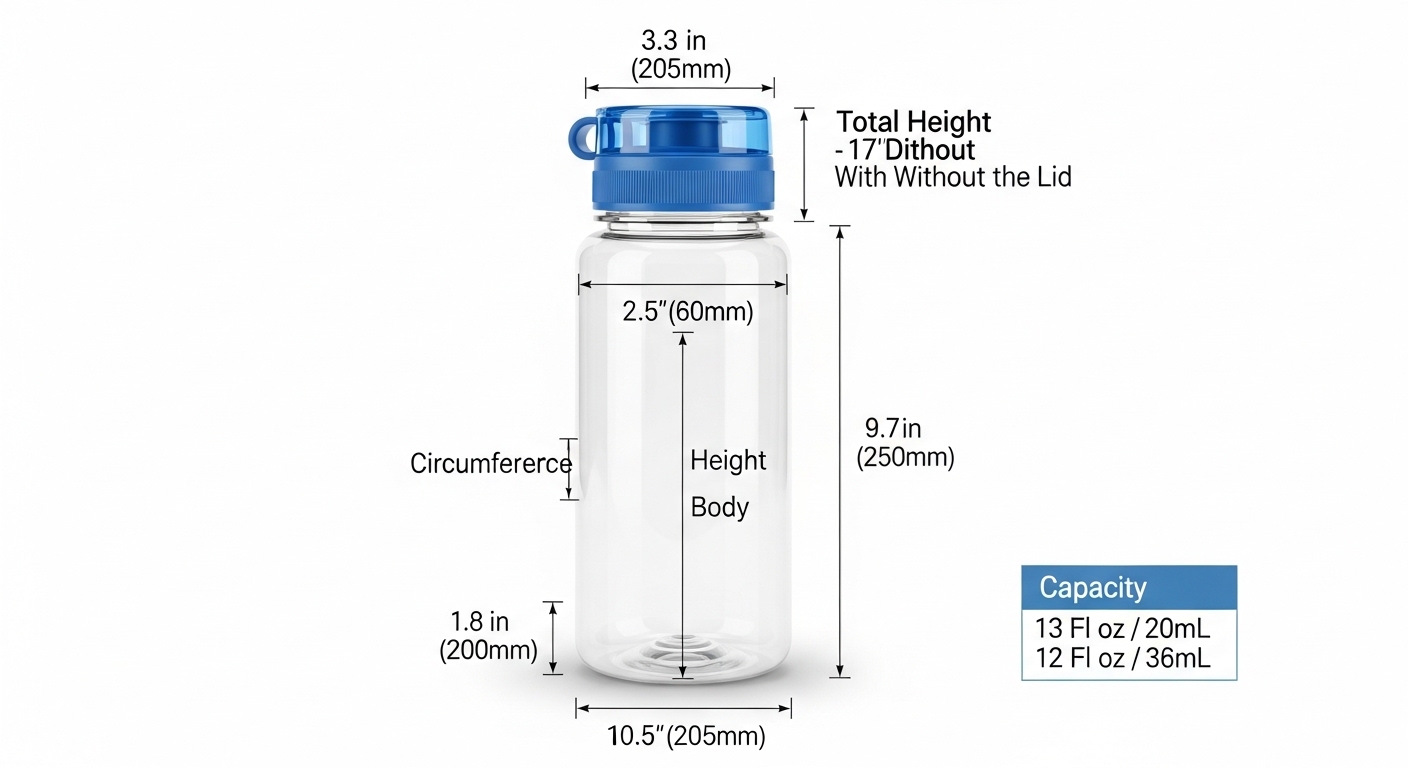
There’s something oddly personal about a water bottle. Funny right? It’s just a container… plastic, steel, sometimes glass. Yet somehow it becomes part of your daily rythm. Sitting on your desk at work, bouncing in a bag during school, or quietly clinking inside a backpack while hiking.
I remember once grabbing a bottle from a store shelf thinking, eh they’re all the same anyway. But turns out they’re… very not the same. The Water Bottle Dimensions, the weight, the width, the cap every little measurement affects how comfortable it feels to carry around during daily hydration.
Some bottles feel perfect in your hand, others awkwardly tall like they’re trying too hard. The truth is, there’s a science behind Water Bottle Size, Water Bottle Measurements, and even tiny things like Bottle Cap Size. Once you start noticing it, you kinda can’t unsee it.
So in this guide, we’ll wander through the curious world of Water Bottle Capacity, shapes, measurements, and everyday uses. Expect practical facts, a few odd observations, and examples of bottles you’ve probably used without thinking about their dimensions before.
Water Bottle Dimensions Chart
| Water Bottle Size | Capacity | Height | Diameter | Typical Use |
|---|---|---|---|---|
| 8 oz water bottle | 250 ml | ~5.5 inches (14 cm) | ~2 inches (5 cm) | Kids, short trips |
| 12 oz water bottle | 350 ml | ~7 inches (18 cm) | ~2–2.25 inches (5–5.7 cm) | School, light use |
| 16.9 oz water bottle | 500 ml | ~8 inches (20 cm) | ~2.5 inches (6.3 cm) | Standard plastic bottle, daily hydration |
| 20 oz water bottle | 600 ml | ~8.5–9 inches (22–23 cm) | ~2.75 inches (7 cm) | Work, commuting |
| 32 oz water bottle | ~950–1000 ml | ~10–11 inches (25–28 cm) | ~3–3.5 inches (7.5–9 cm) | Gym, fitness hydration |
| 1 Liter water bottle | 1000 ml (33.8 oz) | ~11 inches (28 cm) | ~3 inches (7.6 cm) | Outdoor activities |
| 1.5 Liter bottle | 1500 ml | ~12 inches (30 cm) | ~3.2 inches (8 cm) | Hiking, travel |
| 2 Liter bottle | 2000 ml | ~12.5 inches (32 cm) | ~3.5–4 inches (9–10 cm) | Extra large hydration |
Understanding Water Bottle Dimensions (The Basics Most People Ignore)
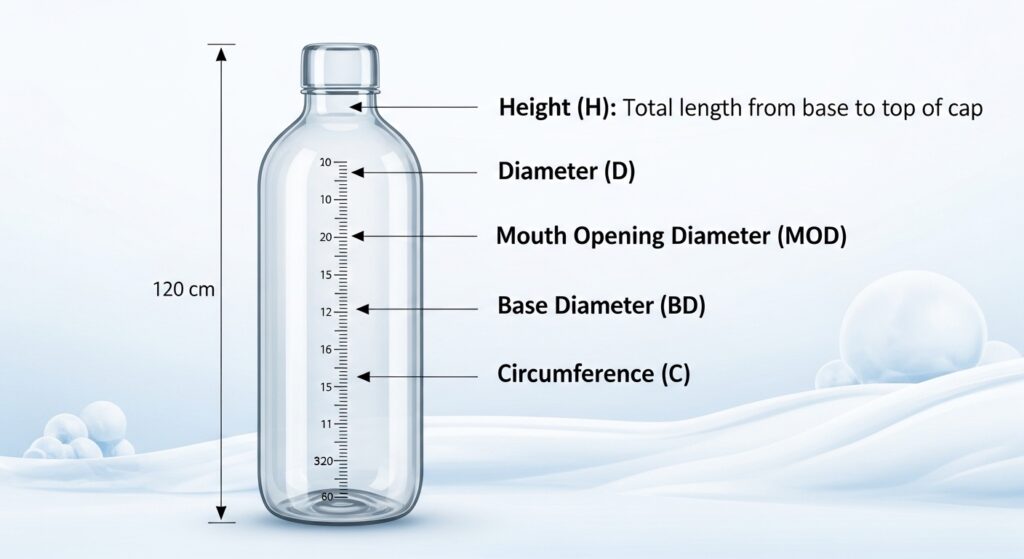
Let’s start simple. When people talk about Water Bottle Dimensions, they usually mean three core measurements:
- Water Bottle Height
- Water Bottle Diameter
- Water Bottle Length or Width
These dimensions tell us how a bottle fits in cup holders, backpack pockets, gym racks… or your hand while jogging across the street half awake.
A typical Standard Water Bottle (the kind you buy at convenience stores) usually looks something like this:
- Bottle Height: 20–30 centimeters (cm)
- Bottle Diameter: around 2.5–3 inches
- Bottle Width: roughly 6–9 cm
- Bottle Length: about 22–28 cm
Now, if we convert some numbers for clarity:
- 500 ml = 16.9 oz
- 1 liter = 33.8 oz
- Water density ≈ 1 g/ml, meaning 500 ml of water weighs about 500 grams (g).
These tiny numbers matter more than you’d think. A bottle that’s just one inch taller might suddenly not fit in a car holder… kinda annoying when you realize it too late.
And that’s why people often search things like:
- How many inches is a water bottle?
- What is the diameter of a water bottle?
- How many ounces in a water bottle?
Turns out, there isn’t just one answer. There’s a whole family of bottle sizes.
Common Water Bottle Size Chart (With Real Measurements)
If you ever wondered what the average water bottle size looks like, here’s a simple bottle size chart that helps visualize it.
Small Water Bottles
These are the tiny, easy-to-carry options used mostly for kids, events, or short trips.
Typical specs:
- 8 oz water bottle
- Height: about 5.5 inches
- Diameter: around 2 inches
- Capacity: 250 ml
- 12 oz water bottle
- Height: roughly 7 inches
- Diameter: 2–2.25 inches
- Capacity: about 350 ml
These are classic small water bottle options. Great for quick hydration tracking during short meetings or for tossing into a purse.
Medium Water Bottles
The middle child of hydration tools. Probably the most commonly used size for daily hydration.
Typical sizes include:
- 16.9 oz water bottle
- Capacity: 500 ml
- Height: about 8 inches
- Diameter: 2.5 inches
- 20 oz water bottle
- Capacity: around 600 ml
- Height: 8.5–9 inches
- Diameter: about 2.75 inches
This category is often considered the standard plastic water bottle size. If you’ve bought bottled water at a gas station, you’ve almost certainly held this one.
It’s light, portable, and fits nicely in cup holders during commuting.
Large Water Bottles
These bottles are the go-to for gym, fitness hydration, or outdoor activities.
Examples include:
- 32 oz water bottle
- Capacity: about 950–1000 ml
- Height: 10–11 inches
- Diameter: 3–3.5 inches
- 1 Liter water bottle
- Height: around 11 inches
- Diameter: 3 inches
- Capacity: 1000 ml
These bottles are often reusable bottles made from stainless steel water bottle materials or thick plastic.
You’ll see them constantly at gyms, usually carried like a badge of hydration pride.
Extra Large Water Bottles
These monsters are built for endurance days.
Examples:
- 1.5 Liter bottle
- Capacity: 1500 ml
- Height: about 12 inches
- 2 Liter bottle
- Capacity: 2000 ml
- Height: around 12.5 inches
These are definitely large water bottle or extra large water bottle territory. People using them usually track serious water intake goals.
I once saw someone bring a 2-liter bottle to a meeting… honestly it looked like they were preparing for a desert expedition.
Water Bottle Height Explained (Why It Matters More Than You Think)
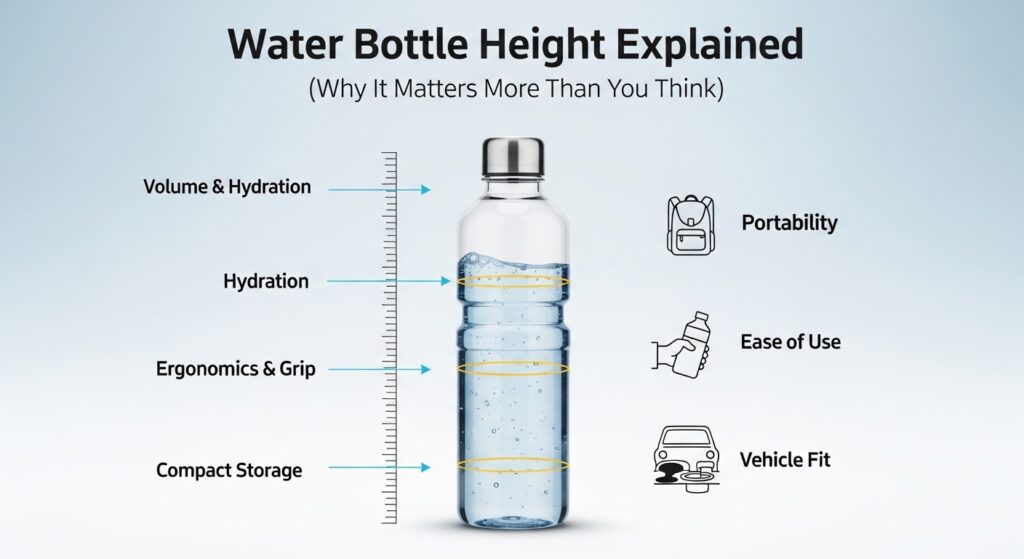
When people ask “How tall is a water bottle?”, they usually mean the vertical measurement from base to cap.
Typical Water Bottle Height ranges include:
- Small bottles: 5–7 inches
- Standard bottles: 7–9 inches
- Large bottles: 10–12.5 inches
Height matters for a surprising number of reasons:
- Backpack pockets
- Car cup holders
- Refrigerator shelves
- Gym equipment holders
If a bottle is too tall, it simply tips over more easily. Not exactly ideal when you’re typing emails and suddenly the bottle decides gravity is optional.
Another small but interesting detail taller bottles often weigh more because of their Water Bottle Capacity.
Remember the water density rule:
Water density ≈ 1 g/ml
So:
- 500 ml bottle ≈ 500 g water weight
- 1 L bottle ≈ 1000 g
That doesn’t even include the bottle itself.
Which explains why a full steel bottle can feel… kinda heavy after a long hiking trip.
Water Bottle Diameter and Width (The Comfort Factor)
The Water Bottle Diameter is the circular measurement across the bottle’s body. It determines how comfortable the bottle feels in your hand.
Most standard water bottle dimensions fall into these ranges:
- Diameter: 2.5–3 inches
- Width: 6–9 centimeters
That diameter also determines whether the bottle fits in:
- Backpack mesh pockets
- Car cup holders
- Bike cages
Bike riders know this pain well. A bottle that’s even slightly too wide just refuses to cooperate.
A typical water bottle dimensions in inches guide would look like:
- Small bottle 2 inches diameter
- Standard bottle 2.5 inches
- Large bottle 3–3.5 inches
Once again, tiny differences matter.
Bottle Cap Size Guide (The Tiny Detail That Matters)
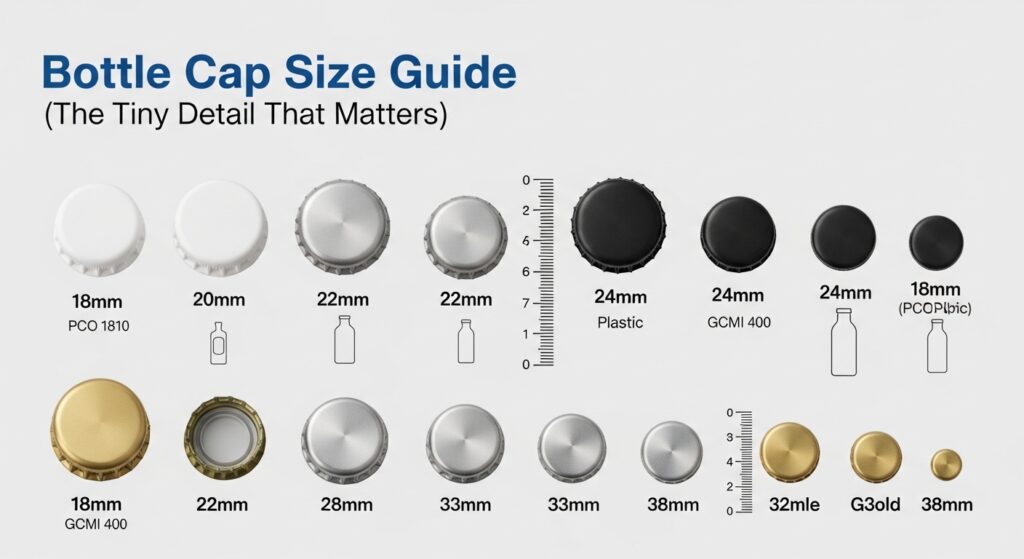
Most people overlook the Bottle Cap Size, but manufacturers care a lot about it.
Common Bottle Cap Diameter standards include:
- 28 mm
- 30 mm
- 33 mm
These measurements are part of a bottle cap size chart used worldwide for plastic water bottle production.
The Plastic Bottle Cap also affects:
- Drinking comfort
- Spill resistance
- Refill convenience
Some reusable bottles now use wider openings to allow ice cubes. That tiny change dramatically improves the drinking experience, especially during fitness hydration sessions.
Water Bottle Measurements in Inches vs Centimeters
Different countries measure bottles differently, which can get slightly confusing.
In the US, most specs use:
- Ounces (oz)
- Inches
Meanwhile many other regions use:
- Milliliters (ml)
- Centimeters (cm)
Example conversions:
- 500 ml = 16.9 oz
- 1 liter = 33.8 oz
So if someone asks:
How many oz is a regular water bottle?
The answer usually is 16.9 oz, which equals 500 ml.
Another common question:
How many water bottles is 1 liter?
Roughly two 500 ml bottles.
These simple conversions help people track daily hydration without overthinking numbers.
Plastic vs Stainless Steel Bottle Dimensions
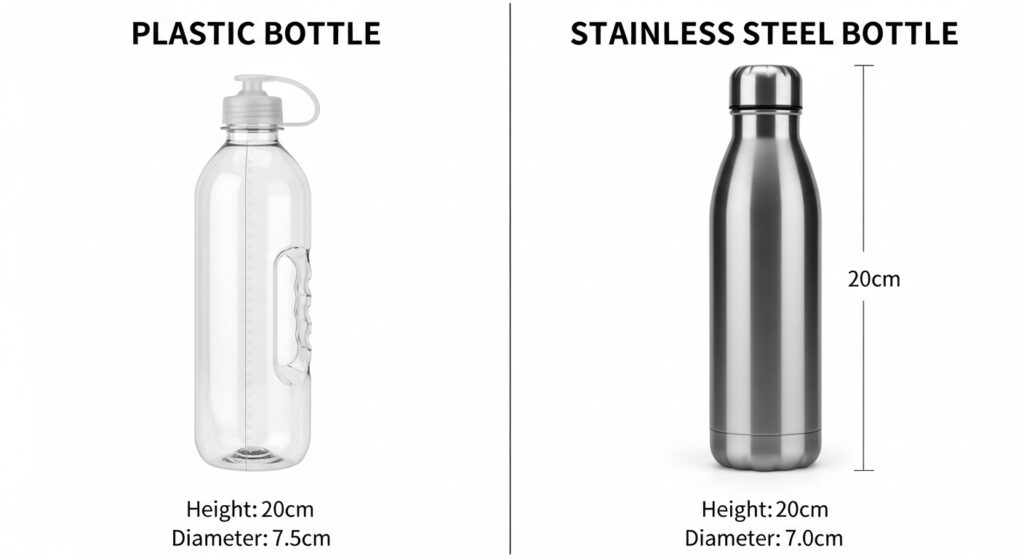
Not all bottles are built the same.
Plastic Water Bottle
These are the lightest options.
Typical characteristics:
- Lightweight Water Bottle Weight
- Slim Bottle Diameter
- Cheap production
- Usually disposable bottle
They dominate convenience stores.
Stainless Steel Water Bottle
These are heavier but more durable.
Features include:
- Thicker walls
- Larger Bottle Width
- Insulated structure
- Better temperature control
They’re popular for gym, work, and outdoor activities.
Honestly, once people switch to steel bottles, they rarely go back.
Water Bottle Size Comparison for Different Activities
Different activities call for different hydration bottle sizes.
Gym & Fitness Hydration
Recommended size:
- 20 oz water bottle
- 32 oz water bottle
Enough water for workouts without constant refilling.
Hiking & Outdoor Activities
Best sizes:
- 1 Liter water bottle
- 1.5 Liter bottle
Longer adventures need more carrying water capacity.
Work or School
Common choices:
- 16.9 oz water bottle
- 20 oz reusable bottle
Portable and easy to refill.
Travel & Commuting
People usually prefer:
- Small water bottle
- Medium water bottle
Something that fits bags and cup holders easily.
See? Bottle size is actually more situational than people think.
Practical Tips for Choosing the Right Water Bottle Size
Here are a few real-world tricks when choosing a bottle:
- Think about your daily hydration goals.
- Check the water bottle height for cup holders.
- Look at bottle diameter for bag pockets.
- Choose wider bottle opening if you like ice cubes.
- Consider water bottle weight when full.
A parent once told me something simple but smart:
“The best bottle is the one you’ll actually carry.”
Not the biggest, not the fanciest.
Just the one that becomes part of your routine.
Frequently Asked Questions
how many inches is a water bottle
A standard water bottle is usually about 8 to 10 inches tall. Smaller bottles may be around 5–7 inches, while larger bottles can reach 11–12 inches in height.
how long is a water bottle
Most water bottles are approximately 8 to 12 inches long, depending on their size and design. Compact bottles are shorter, while larger bottles used for outdoor activities may be longer.
how tall is a 16.9 oz water bottle
A 16.9 oz (500 ml) water bottle is typically about 8 inches (20 cm) tall. This size is common because it fits easily in bags and car cup holders.
how much water is in a plastic water bottle
A typical plastic water bottle usually contains 16.9 ounces (500 milliliters) of water. However, plastic bottles also come in other sizes such as 8 oz, 12 oz, 20 oz, and 1 liter.
how many inches is a bottle of water
Most bottles of water measure around 8 inches in height and about 2.5 to 3 inches in diameter. The exact size can vary depending on the bottle’s capacity and design.
REad this Blog: https://marketbellions.com/how-is-2mm/
Final Thoughts: The Surprisingly Fascinating World of Water Bottle Dimensions
At first glance, Water Bottle Dimensions seem like a boring topic. Just numbers, right?
But once you start noticing the differences in water bottle height, water bottle diameter, bottle capacity, and bottle cap size, it becomes clear these details shape our daily habits more than we realize.
From tiny 8 oz water bottles to huge 2 liter bottles, every size serves a purpose. Whether you’re hiking, heading to the gym, sitting at work, or rushing through school, the right bottle quietly supports your water intake goals.
Hydration isn’t just about drinking water. It’s about making it easy to keep doing it everyday.
And sometimes… all it takes is the right bottle.
If you’ve got a favorite water bottle size or a funny hydration story, feel free to share it. People are oddly passionate about their bottles — and honestly, that’s kinda great.