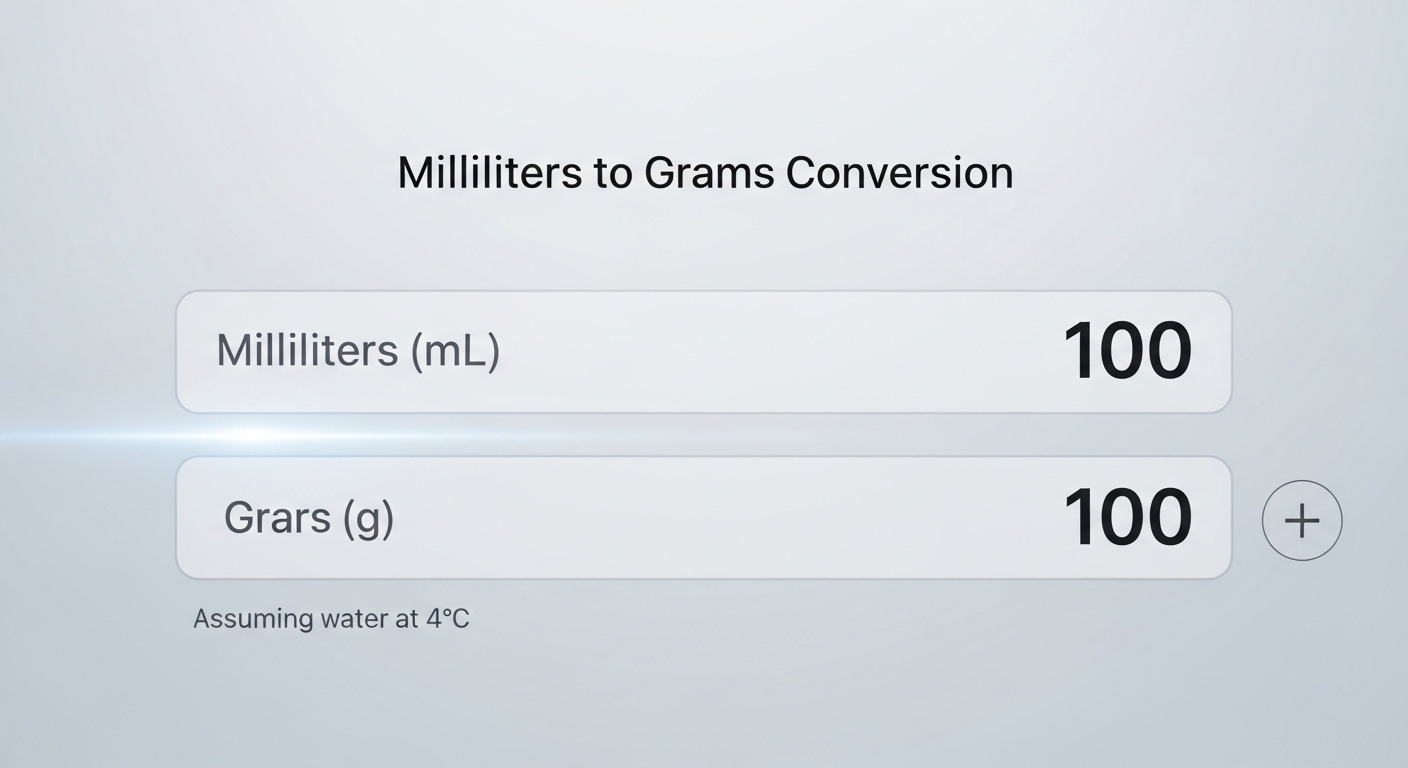

Have ya ever been in the middle of baking a cake or mixing up some aqueous chemicals and suddenly realized… wait, how many grams is this ml again? Yeah, me too.
There’s something almost poetic about trying to balance volume and mass, like the universe whisperin’ “measure twice, bake once.” And it’s not just a kitchen thing scientists, chemists, and even home experimenters stumble on this all the time.
Understanding how milliliters to grams conversion works is kinda like learning a secret handshake between volume and weight once you know it, doors open to precision, accuracy, and less messy flour explosions.
| Ingredient | Density (g/mL) | 50 mL (g) | 100 mL (g) | 200 mL (g) |
|---|---|---|---|---|
| Water | 1.00 | 50 | 100 | 200 |
| Milk | 1.03 | 51.5 | 103 | 206 |
| Cooking Oil | 0.92 | 46 | 92 | 184 |
| All-Purpose Flour | 0.53 | 26.5 | 53 | 106 |
| Granulated Sugar | 0.85 | 42.5 | 85 | 170 |
| Honey | 1.42 | 71 | 142 | 284 |
Why Milliliters and Grams Matter
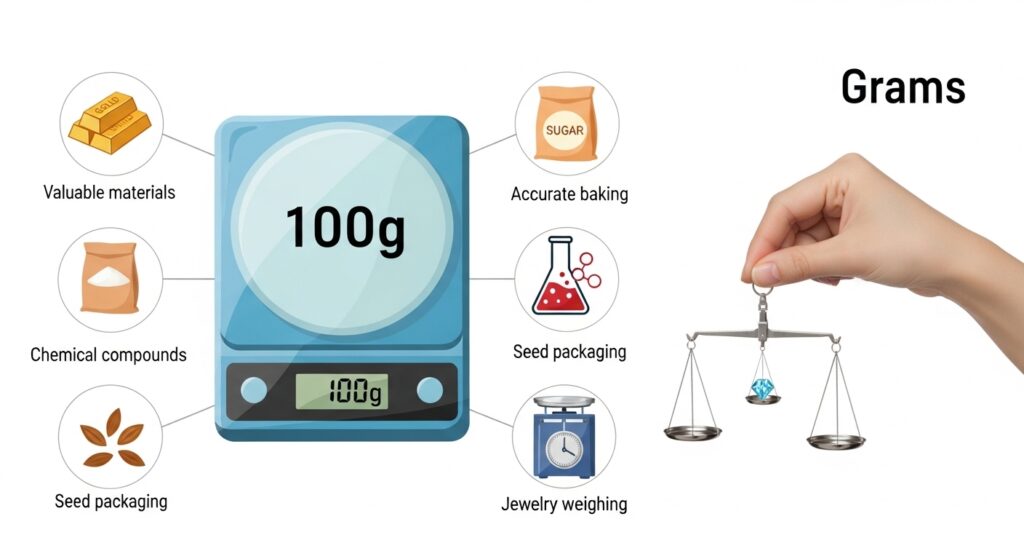
Let’s get real: milliliter (mL, ml, mℓ, cc) is a unit of volume, while gram (g) is a unit of mass. Seems simple enough, right? But here’s the twist 1 milliliter of water equals 1 gram, only because water’s density is super close to 1 g/mL at room temperature.
Now, throw all-purpose flour, granulated sugar, or cooking oil into the mix and suddenly 1 mL isn’t 1 g anymore. You gotta account for density, clumping, compaction, and sometimes even the altitude you’re baking at.
This is where the magic of a milliliters to grams conversion calculator comes in. Instead of eyeballing it (and risking your soufflé collapsing), you just punch in the numbers, pick your ingredient, and boom the weight measurement appears. It’s like having Ethan Dederick, PhD whispering exact instructions right into your measuring cup.
The Science Behind Volume-to-Weight Conversion
To understand this, we dive into some geeky but fun stuff: mass-volume stoichiometry. Yeah, sounds like a spell from a wizarding cookbook, but it’s just the relationship between how much volume an ingredient takes up and how much it weighs. The formula is fairly simple:
Mass (g) = Volume (mL) × Density (g/mL)
Density differs per ingredient:
- Water – 1 g/mL
- Milk – ~1.03 g/mL
- Cooking Oil – ~0.92 g/mL
- All-Purpose Flour – ~0.53 g/mL (depends on fluffiness!)
- Granulated Sugar – ~0.85 g/mL
So, pouring 100 mL of milk won’t give you exactly 100 grams it’ll be 103 grams. Small difference, but in baking, that tiny margin is the difference between a cake that’s moist and one that’s more brick than dessert.
For more official guidelines, check the National Institute of Standards & Technology (NIST) resources here and here. These folks literally nerd out on this stuff so you don’t have to.
Cooking Measurements: Why You Can’t Just Eyeball It
Cooking, especially baking, is a subtle dance of physical quantities. Ever tried converting ounces (oz) to grams in your grandma’s old recipe? Yeah, that can be fun… if you like random kitchen explosions.
Here’s a quirky thing: liquids are usually forgiving water, milk, juice, they behave. But powders? Powders are drama queens. All-purpose flour can compact in a scoop or puff out in the bag.
That means 100 mL might weigh 50 grams in one scoop and 60 grams in another. That’s why professional bakers rely on scales rather than just measurement tables.
And if you’re dealing with powdered chemicals in a lab setting, miscalculating even a gram could change the yield of reaction or worse, ruin your experiment.
The beauty of a milliliters to grams conversion calculator is it accounts for that. Some calculators even let you choose ingredient type, so you get a precise mass equivalence instantly.
Practical Applications: Home, Kitchen, and Lab
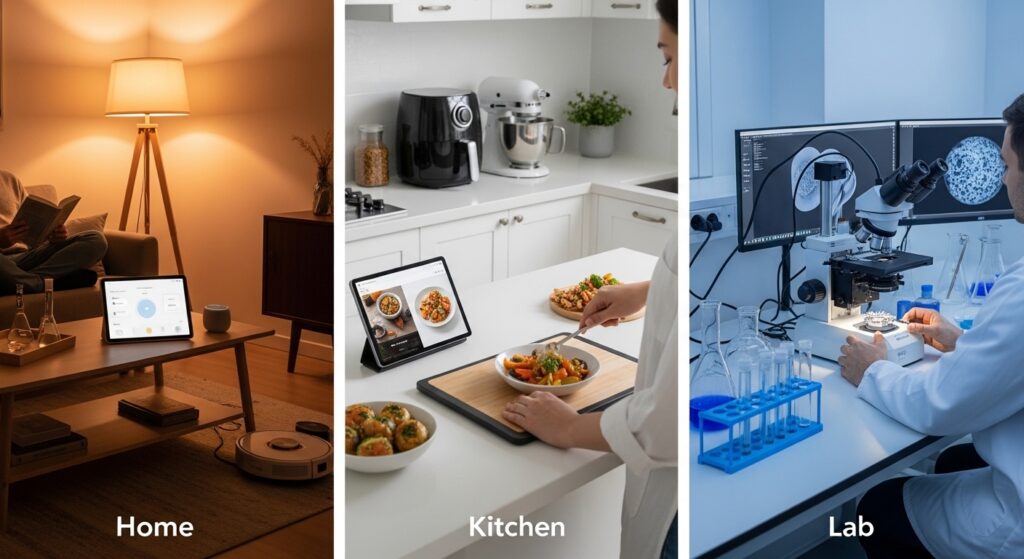
Whether you’re whipping up a powdered sugar frosting, mixing aqueous chemicals, or just trying to make grandma’s cookie recipe work with the metric system, this skill is pure gold.
- Home cooking & baking: Convert your grandma’s old US recipes to metric without guessing. ½ cup of flour? Check the density, and you’ll know the grams.
- DIY cosmetics or bath bombs: When measuring chemical reactions, a wrong ratio can make fizzing go wild… or flop entirely.
- Science experiments: If you’re in a classroom or lab, knowing milliliters to grams is key for accuracy in SI units. CK-12 Foundation has a fantastic guide on mass-volume stoichiometry that makes it approachable.
Even in everyday life, imagine measuring milk for your coffee with precision, or figuring out how many grams of cooking oil your recipe calls for. Small wins, but it feels kinda like being a wizard with numbers.
Tools for Milliliters to Grams Conversion
You don’t have to do this in your head. Modern tools make life easier:
- Online calculators: Just select your ingredient, enter the volume, and get grams instantly.
- Apps: Some apps let you scan a barcode or input recipe ingredients and handle conversions for you.
- Manual charts: Handy for the old-school crowd who likes metric conversion tables taped to their fridge.
- Digital kitchen scales: If you want ultimate accuracy, this is the way. Especially for tricky powders like all-purpose flour or powdered chemicals.
Fun fact: Even Joe Sexton (author) jokes that a good kitchen scale is like a “magic wand” for anyone serious about cooking. And honestly, he’s right.
Understanding Density for Everyday Ingredients
Here’s a quirky thing about density: it’s like the personality of your ingredient. Some are chill (water), some are stubborn (flour), and some are slick (oil). Knowing density helps you convert milliliters to grams quickly.
- Liquids: Usually straightforward. Water, milk, and juice are easy. Minor temp changes affect density slightly, but nothing dramatic.
- Powders: Watch out! Clumping / compaction can throw off measurements. A lightly scooped 100 mL of flour can weigh half as much as a tightly packed one.
- Chemicals: Always check the exact g/mL formula from trusted sources like NIST. Safety first!
Even in baking, density influences texture. Cakes, breads, and cookies all react differently depending on how much your dry ingredients actually weigh.
Fun Ways to Remember Milliliters to Grams
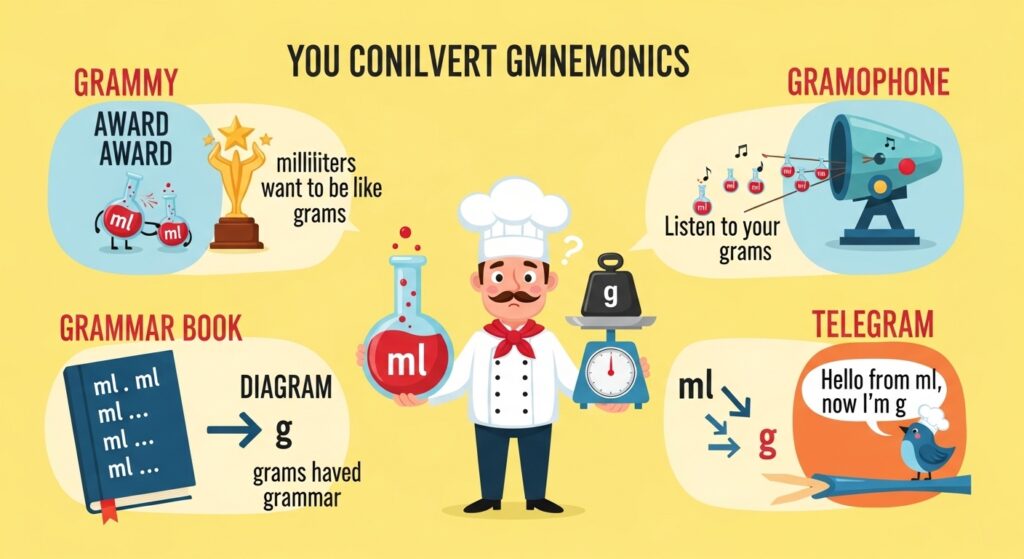
Okay, this might sound silly but humor helps retention:
- Think of 1 mL of water as “1 tiny cube of mass magic.”
- Flour? Picture a fluffy cloud you’ll need more volume for the same weight.
- Oil? Imagine a tiny slippery serpent less mass per same volume.
Also, try visual mnemonics: 100 mL of water = small coffee cup; 100 g flour = heaping handful. Visuals stick better than numbers sometimes.
Tips for Accurate Measurement
Even the best conversion tables need common sense:
- Always level off scoops for powders
- Avoid air pockets in liquids when measuring
- Check temperature for density-sensitive liquids (milk behaves differently hot vs cold)
- Use scales when precision matters especially for baking or chemical reactions
Pro tip: Even if you’re just eyeballing for home cooking, knowing these tricks saves headaches and soggy cakes.
Frequently Asked Questions
ml to grams
To convert milliliters to grams, multiply the volume by the density of the substance (grams = milliliters × density in g/mL).
ml to g
Milliliters and grams are related through density, so 1 mL of water equals 1 g, but other liquids or powders vary based on their density.
milliliters to grams
Milliliters measure volume, grams measure mass; to convert, multiply the milliliters by the ingredient’s density in g/mL.
100 ml to grams
For water, 100 mL equals 100 g; for other substances, multiply 100 by their specific density in g/mL.
ml to gram
Milliliters can be converted to grams by using the formula: grams = milliliters × density (g/mL), depending on the ingredient.
Read this Blog: https://marketbellions.com/how-long-is-20-feet/
Conclusion: Embrace the Magic of Measurement
Converting milliliters to grams is more than just a math trick. It’s a bridge between precision and creativity, science and art. It allows you to honor recipes, achieve accuracy in measurement, and even impress friends when your cake comes out flawless.
So next time you scoop all-purpose flour or pour milk for pancakes, remember you’re not just measuring, you’re dancing with the universe of physical quantities, metric system, and tiny wonders of mass-volume stoichiometry.
Play with it. Experiment. Use a milliliters to grams conversion calculator when you need a safety net. And maybe, just maybe, enjoy the weird thrill of being both a scientist and a baker in the same moment.
